Showing posts with label Phu Quoc. Show all posts

Ham Ninh fishing village ( Phu Quoc ) - An idyllic beauty

Ham Ninh fishing village located on the Dong island, behind the mountains, facing the immense sea, the place still seems to remain unspoiled with makeshift thatched bamboo walls. The main occupation in Ham Ninh fishing village is still the pearl diving, catching sea cucumbers...


In the past, fishermen came here and founded a fishing village. Ham Ninh is quiet marinas and boat safety. The boat from the mainland to here to transport goods and seafood.

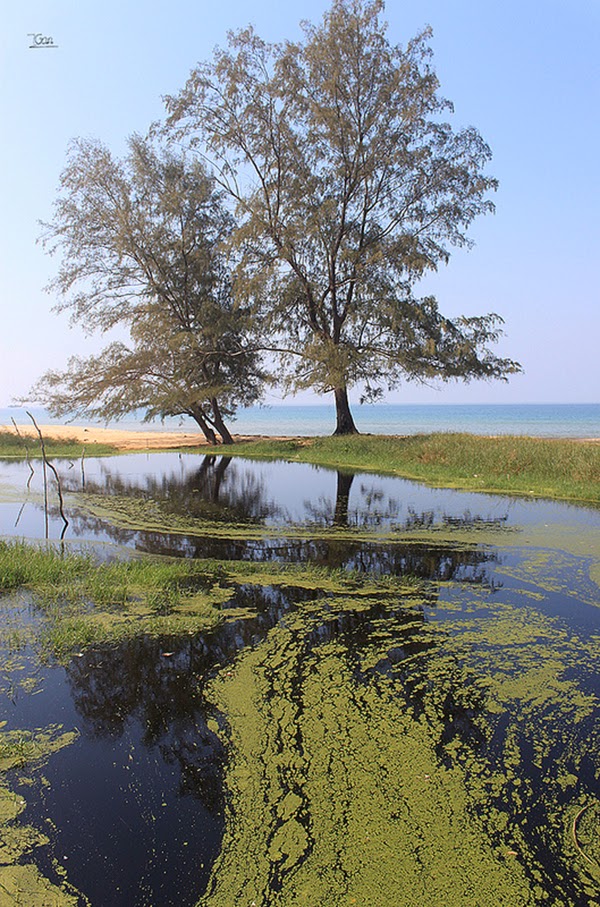
Standing on the beach Ham Ninh, the island og HaiTac archipelago ( Ha Tien ) looming in the distance. Southeast deviate, Nghe rock blue water shimmering. The South is Ong Doi - the last headland of the island. Visit Ham Ninh in the early morning or the night of a new moon, the beauty of this beach. Here visitors will enjoy scenes eclipses floating on the sea surface.

Come enjoy without crab boil as incomplete. Crab is the specialty of this region, almost always. I just caught the boiled crabs, bright red, succulent meat, then put salt and pepper fresh lemon...
Leaving Ham Ninh, tourists also do not forget to bring a few dozen crabs for dinner with friends to sip in Vietnam tour.

Vietnam is a great destination

" With a glorious history, national parks, mountains, beautiful beaches, romantic and charming city rich culinary background characteristics, Vietnam has become an attractive destination with visitor".

From the mid-nineteenth century, Vietnam was a French colony for a period of nearly 100 years later. Today , people still see the architectural style of the French in Hanoi, Hai Phong and Ho Chi Minh City.

Every day , in every street bakery sells baguette  bread with pate. Currently, only few people have the ability to speak French, mostly older people.


Pate Bread is one of the famous dishes of the people of Vietnam.

Vietnam has experienced many wars that affected the economy. After reunification, peace was restored, the new economy is recovering. Many people in Vietnam can not be forgotten period of hardships experienced. According to estimates, there are about 3 million people in Vietnam have died in the war. Each year thousands of people injured or killed by these ordnance still lying on the ground not explode.

Several museums in Hanoi, Ho Chi Minh City exhibited artifacts in the War as tanks, rusty aircraft, memorable events... Visitors can tour the battlefield evil a list as Khe Sanh, Dien Bien Phu, Vinh Moc Tunnels...

With the attractiveness of Vietnam culture, the number of tourists to Vietnam increased from a few thousand people ( in 1991 ) to more than 8 million visitors ( in 2013 ).

Vietnam is considered a safe country, political stability. Tourists are not too concerned with crime or security. However , only a single point except that traffic congestion in peak hours.

About cuisine , Vietnam is an exciting destination, tourist attraction. These ingredients make the dish very fresh : vegetables picked from the garden, sea fishing and day use... Unlike Western cuisine, food Vietnam exquisite combination in the use spices, fresh herbs from the market, especially the spicy chili is unmistakable.
Each region has its excellent cuisine. The meal is a blend of cooking characteristics and preferences of the people combined with the sweet, sour, salty, crunchy, spicy and wonderful spices to create an unforgettable taste.

The Vietnam have special spices, known as " soy sauce " or " sauce ". This is the kind of spice that northern people often give to those delicious nutritious dishes like beef noodle soup. Meanwhile, the Southern people use fish sauce to add chilli curry, with coconut milk greasy. In the central region, the dish is extremely delicate process. The cuisine of Hue and Hoi An are cooking more complex and sophisticated, creating exquisite taste great.


Draught beer is the drink so great that visitors enjoy when traveling to Vietnam.

As to Vietnam, tourists can not ignore the beer bar. The people drinking beer in the cup to and relatively cheap, only 5 ,000 VND / cup. One of the other great drinks that tourists should enjoy it while visiting Vietnam 's rice wine. When drinking it, people often enjoy small sips to be able to feel its special flavor.

The French introduced coffee culture in Vietnam since the 50s of the XIX century and now it has become a habit of the people. Many people like to drink brewed coffee filter, then added sugar or milk depending on your preferences. This is a style taste of coffee is extremely interesting.


Van Mieu Quoc Tu Giam is one of the most amazing destinations in the capital , Hanoi.

Capital Hanoi thousand years of civilization will impact the senses of visitors. An ideal destination for those arriving in this land is the old town. You will have the opportunity to stroll through the narrow streets, witness the carvers and craftsmen make bamboo ladder or have the opportunity to set foot in the neighborhood with numerous culinary dishes attractive, especially sticky rice.

Some famous places to visit in the capital Hanoi is Ho Chi Minh Mausoleum, Van Mieu Quoc Tu Giam... In addition , visitors also can not ignore the contemplation of the beautiful scenery of Ha Long Bay. You can also visit Lan Ha Bay or sailing to Bai Tu Long Bay to admire the majestic limestone mountains, pristine.


Hoi An shimmering in the brilliant light lantern.

Hue was the capital of Vietnam in 1802 - 1945, with many temples , pagodas, palaces and tombs majestic, magnificent. Among the famous scenic spots in the central town of Hoi An. Located along the coast 150 km southeast of Hue, Hoi An became tourism destination. This place is famous for roads rarely get stuck in traffic, shimmering riverfront with brilliant lanterns, rich tailor.

The specialty dish of Central Vietnam is  Banh Khoai (delight cake), Banh bao , Cao Lau... The most beautiful beaches of Vietnam is located on the central strip as Bai Bau, Doc Let, the resort city -  Nha Trang and Mui Ne.


The floating market in Can Tho have special attraction for visitors.

Next stop is Ho Chi Minh City (Saigon). This is the economic center of the south, with bustling streets, crowded commuter vehicles. These buildings were built during the French colonial located next to the skyscrapers are designed in a modern style to create wonderful landscape. Once here, visitors can not fail to War Remnants Museum, Reunification Palace is famous for Austin Powers -style architecture.

The Mekong Delta region is famous for the floating market in Can Tho. This is an exciting destination in your tours in Vietnam. Guests also have the opportunity to experience life in rural areas. Bay Thoi ( Binh Thuan, Ninh Hoa ) is one of the great options for this form of tourism. In addition , visitors also can not ignore travel to Phu Quoc Island - one of the most amazing sights in Vietnam.

Phu Quoc - jewel island

Phu Quoc owns the most beautiful beaches and delicious seafood in Vietnam. No need expensive resorts in the new bathroom...

Sea with blue color and many different coral abundance, and stretches of fine white sand beach, the uninhabited islands with green coconut trees silhouetted by the sea..... just some of the many things to change Phu Quoc become paradise.


But it 's another lovely of Phu Quoc makes visitors want to return to many times it is the idyllic and pristine islands - or not yet commercialized by tourism development, although this is a popular destination for both domestic and international customers.

Phu Quoc has entered the most beautiful time of the year, if you need a bit of information about this fascinating island, you can refer to our article below.

How Come ?
In your Vietnam tours, you can fly nonstop from Hanoi or Ho Chi Minh City, Can Tho and Rach Gia to Phu Quoc. In Kien Giang area, you can choose to go high speed trains from Ha Tien or Rach Gia. Sometimes, sailed from Rach Gia faster and more convenient to fly from here. Train runs on time and fast.


Discover Phu Quoc by region
There are 3 main directions visit Phu Quoc, can be divided into 3 days, each day exploring a completely directed.

Nam Dao : go along the road being built across society to from Duong To to An Thoi will be a great experience, but also very risky if you go at night. You will have the opportunity to admire the endless beaches extending from Duong Dong to Nam Dao.


Here, you can visit and have fun at points such as An Thoi port, Nha Lao Cay Dua, especially Sao beach. This beach is an interest for those who can not swim because the water is not deep, only to the horizontal and extends tens of meters. You can also organize games with friends under the sea and then to eat fresh seafood along the beach and watching the sunset.

In addition, you can also stop at some point as a pearl farm for shopping...

Dong Dao : This route traffic more smoothly with the broad paved road and go straight from Duong Dong open until the last point is Ham Ninh fishing village, where you are free to enjoy the fresh seafood, especially blue crabs and dried seafood buy as a gift. Or stop in Tranh streams , explore the blue water and beautiful scenery here.

Along the way you can visit the Su Mon pagoda, sunrise or sunset at Ham Ninh. In particular, the fishing village, you will have the opportunity to explore the lives of the fishermen here, the poor house and the kids giggle as you hold the camera up to capture them.


Bac Dao : this is assessed as the most beautiful road when you travel in Phu Quoc, almost all of the attractions here are kept pristine natural features, will be a most interesting journey if you go by motorbike relatives and friends to experience the north of Phu Quoc Island. The primeval forests, the quiet river will create a unique scene. Enjoy Cua Can beach at sunset or sunrise at Bai Thom...

Duong Dong Town

It is the center of Phu Quoc Island, concentrating economic activity in the island culture. The resort Resort or the great restaurants, the main shopping areas are concentrated here. A day to explore Indochina, you can visit Dinh Cau Temple - the most sacred place on the island, Sung Hung pagoda, Dong Duong temple, Cao pagoda, Dinh Ba temple.


Also, Duong Dong there are many beautiful beaches as Ong Lang beach, Truong beach - where most of the most resort in Phu Quoc, is rated as one of the beautiful beaches here. Clean and sunny all year.

You can also visit places fish production, specialty of Phu Quoc.

The most attractive activities in Duong Dong as Dinh Cau Night Market, where fresh seafood and tasty. Here, you can eat seafood and then be able to shop for souvenirs at the end of market. Shops here mostly by local people sale so you can have peace of mind on the issue price and quality.


If popular meal during the day, you can go to Nu Na - very tasty and cheap, mostly locals come here to eat. Vehicles on the island.

In Duong Dong, I recommend walking ( of course depending on your endurance ) because the town is small and every point not too far apart.

You can rent motorbikes to explore the island or hire travel car.

Seven attractive destinations in Vietnam

Beautiful beaches, year-round green tropical parks, mighty rivers, unique fishing villages, special culinary characteristics ... are always the force of gravity of Vietnam in the eyes of foreign travelers.

1. Hanoi


Voted by Smart Travel Asia magazine as one of the most attractive destinations in Asia, Hanoi has its own charm to attract domestic and foreign tourists.

Throughout the thousand years of its eventful history, marked by destruction, wars and natural calamities, Hanoi still preserves many ancient architectural works including the Old Quarter and over 600 pagodas and temples. Famous sites include the One Pillar Pagoda (built in 1049), the Temple of Literature (built in 1070), Hanoi Citadel, Hanoi Opera House, President Ho Chi Minh's Mausoleum...

Hanoi also characteristically contains 18 beautiful lakes such as Hoan Kiem Lake, West Lake, and Truc Bach Lake..., which are the lungs of the city, with their surrounding gardens and trees providing a vital source of energy.

Many traditional handicrafts are also practiced in Hanoi including bronze molding, silver carving, lacquer, and embroidery. Hanoi has many famous traditional professional handicraft villages such as Bat Trang pottery village, Ngu Xa bronze casting village, Yen Thai glossy silk...

2. Sa Pa

Sapa
Cool climate all year round and the beautiful natural landscapes are the most charming features of Sa Pa. 
Sapa Vietnam is a favorite attraction to tourists, both domestic and foreign thanks to its beautiful scenery and colorful culture. The French used to consider Sapa as Summer Capital of Northern Vietnam in the early decades of the 20th century. Its naturally gifted beauty keeps attracting more and more people to spend their vacation there since then.

Aside from leisure pace of sightseeing and exploring the diversity of culture in Sapa, this is also an ideal place for more adventurous tourists with many trekking tours available. Or, you can also do some trekking on your own and stay with the hill tribes for an insightful understanding of the ethnic groups here.

 April and May are the best time for tourists to watch the most scenic beauties of Sapa, or else it might be cold and foggy before that and rainy after that. During these two peak months, the town is blossoming with pink and white flowers, and green pastures in valleys. The clouds that settle in the valley in early morning would quickly disappear.

 Most tourists agree that it would be regretful if the leisure and relaxation time in cool and fresh weather is not accompanied by visiting trips to Sapa's prideful natural beauty spots, such as Ham Rong Mountain, Silver Waterfall, Rattan Bridge, Bamboo Forest and Ta Phin Cave.

 Sapa is home to various families of flowers of captivating colors, unique in the vast country. When Tet, the Lunar New Year Festival, comes, the whole township of Sapa is filled with the pink color of peach blossom brought from the vast forests of peach just outside the town. Sapa is regarded as the kingdom of orchids as well.

Foreign tourists are actually fond of scarce and precious specialties of Sapa, such as forest's product, handicrafts, delicacies (smoked meat, "thang co", "cai meo", san lung wine, corn wine, etc.), typical of ethnic minority people.

Local markets are the town's typically cultural element, which are always crowded and joyful, attracting hundreds of visitors. This is the common place for minority groups to gather and exchange goods. Market sessions are also a chance for local people to promenade. No foreign visitor could help joining such a market session, a typical cultural element of Sapa. What’s more, tourists coming to Sapa at weekends have the great chance to learn about local ethnic people's courtship and martial life, through the Sapa love market and wife kidnapping ceremony of the H'Mong group. The ceremony will begin on April 29th.

3. Halong Bay

Halong Bay

Imagine 2000 or more islands rising from the emerald waters of the Gulf of Tonkin and you have a vision of breathtaking beauty. Halong translates as ‘where the dragon descends into the sea’, and legend claims the islands of Halong Bay were created by a great dragon from the mountains. As it charged towards the coast, its flailing tail gouged out valleys and crevasses. When it finally plunged into the sea, the area filled with water, leaving only the pinnacles visible.

Designated a World Heritage site in 1994, this mystical landscape of limestone islets is often compared to Guilin in China or Krabi in southern Thailand. In reality, Halong Bay is more spectacular. The bay’s immense number of islands is dotted with wind- and wave-eroded grottoes, and their sparsely forested slopes ring with birdsong.

Beyond a boat cruise, visitors to Halong also come to explore the caves. There are few real beaches in Halong Bay, but Lan Ha Bay has idyllic sandy coves a short boat hop from Cat Ba Town.

Sprawling Halong City is the bay’s main gateway, but the raffish collection of high-rise hotels and karaoke bars is not a great introduction to this incredible site.

Most visitors sensibly opt for tours that include sleeping on a boat in the bay. Some travellers dodge Halong City and head straight for Cat Ba Town, from where trips to less-visited, equally alluring Lan Ha Bay are easily set up. Cat Ba Island can also be a good base for visiting the landscapes of Halong Bay itself.
As the number-one tourist attraction in the northeast, Halong Bay attracts visitors year-round. February to April is often cool and drizzly, and the ensuing fog can make visibility low, but also adds an ethereal air. From May to September tropical storms are frequent, and year round, tourist boats sometimes need to alter their itineraries, depending on the weather. Some tour companies offer full or partial refunds if tours are cancelled; check when you book.

4. Cu Chi Tunnels

Cu Chi Tunnel
Cu Chi Tunnel is 70 km from Ho Chi Minh City in the Northwest. It is miniature battle versatile of Cu Chi’s military and people during the 30-year struggle longtime and fierce to fight invading enemy to receive independence, freedom for motherland. It also is the special architecture lying deeply underground with many stratums, nooks and crannies as complex as a cobweb, having spares for living, meeting and fighting with total lengths over 200 km.

Real legends coming from the Tunnel are over human imaginativeness. Creeping down into the tunnel, only some yards, you can find out why Vietnam, A tiny country could defeat its enemy, the large and richest country in the world. Why Cu Chi, a barren and poor land could face strongly for 21 years to the army crowded many times compared with its force, warlike and equipped modern war weapons and means.
In the fight, Cu Chi people won illustriously. Thanks to systems of tunnel ways, fortifications, combat trenches, soldiers and people of Cu Chi fought very bravely creating glorious feat of arms. The American invaders at first time stepped into Cu Chi land, they had to face so fierce resistances from tunnels from important and very difficult bases that they cried out, “Underground villages”, “Dangerous secret zone”, “cannot see any VC but they appear everywhere”… With its war pasture, Cu Chi Tunnels become a historical war hero of Vietnamese People like a 20th century legend and famous land in the world.

5. Phu Quoc

Phu Quoc
One of Vietnam’s star attractions, mountainous and forested Phu Quoc is a splendid tropical getaway set with beautiful white-sand beaches and quaint fishing villages.

The tear-shaped island lies in the Gulf of Thailand, 45km west of Ha Tien and 15km south of the coast of Cambodia. At 48km long (with an area of 1320 sq km), Phu Quoc is Viet­nam’s largest island.

Phu Quoc is not really part of the Mekong Delta and doesn’t share the delta’s extraordinary ability to produce rice. The most valuable crop is black pepper, but the islanders here have traditionally earned their living from the sea. Phu Quoc is also famous in Vietnam for its production of high-quality fish sauce (nuoc mam).

The island has some unusual hunting dogs, which have ridgebacks, curly tails and blue tongues and are said to be able to pick up their masters’ scent from over 1km away (the nuoc mam their masters eat certainly helps). Unfortunately, the dogs have decimated much of the island’s wildlife.
Despite the impending development (of a new international airport, a golf course and a casino), much of this island is still protected since becoming a national park in 2001. Phu Quoc National Park covers close to 70% of the island, an area of 31, 422 hectares.
Phu Quoc’s rainy season is from July to November. The peak season for tourism is midwinter, when the sky is blue and the sea is calm.

6. Mekong River

Mekong Delta River
Vietnam is famous for its two big areas growing rice. The one in the North is the Red River Delta, and the other in the South is the Mekong Delta.

The Mekong Delta is formed from the mighty Mekong River which originated from the Tibetan highland plateau 2,800 miles away. The river makes its way through China, Myanmar, Laos, Cambodia and South Vietnam before flowing into the sea. The part of the river running through Vietnam is tore into nine branches and named Cuu Long by Vietnamese locals, which means Nine Dragons to describe the nine branches that terminate the flow of this great river as it is absorbed by the sea.

The locals in Mekong delta live right on the edge of the rivers or canals. Their home structures varied from place to place as they are built conveniently from whatever materials found. Fisheries can be found right under those homes. It can be said that life in the delta is tightly woven with its rivers with floating markets while other activities and businesses are conducted on its banks.

Visiting the Mekong delta, tourists can stop at major cities and towns such as Bac Lieu, Tra Vinh, Ben Tre, My Tho, Chau Doc, Sa Dec, Long Xuyen and Can Tho… Aside from the cities, there are many national parks and nature reserves in the area. Some of the names are Con Dao national park, Lung Ngoc Hoang nature reserve, Mui Ca Mau national park, Nui Cam nature reserve, Phu Quoc national park, Thanh Phu nature reserve, Tram Chim national, etc…

Taking a Mekong river cruise is the best way to experience the local life on the river as well as to enjoy the beautiful scenery along the way. There are many cruise operator offering cruising services for tourists.
The usual itinerary for a Mekong trip is around 5-7 days. The trip often starts from Ho Chi Minh City and then goes down along the Tien River or Hau River. For longer itineraries, a few tourist destinations in Cambodia or Laos can be included in the routes.

7. Hoi An

Hoi An
The ancient town of Hoi An, one of six features in Vietnam granted world heritage status is a very popular destination for tourists. It is renowned for its peacefulness. But when the moon gets fuller in the middle of the lunar month, this cozy town with old houses and small streets looks even more romantic and beautiful as colorful lanterns light the night-time scene.

Long-lived traditions and customs tell tourists a lot about the lifestyles of Hoi An people going way back. Tourists have the chance to learn about such activities of Chinese origin as bai choi or Vietnamese musical bingo. Then there is Chinese chess, earthen-pot breaking while blindfolded and more.

 In addition to the beauty of Hoi An, the dedication of local tourism managers have turned the town into a must-visit destination for tourists when they travel around the important central part of Vietnam. That Hoi An can provide tourists with more diversified services and local cultural features makes it even more attractive.
Walking, biking or using a cyclo-pedicab to cruise through the narrow streets is equally enjoyable. Visitors just need to bear in mind that they will need to stop a lot as every corner of the town is likely to attract their admiration.

The more the town is explored, the more enjoyable it is. Tourists are introduced to ancient mossy tile-roofed houses with special architectural features and very Chinese names like Sanh Hien and Phung Hung, the Japanese Bridge, the assembly halls of Chinese from Fujian and Guangdong, the Hong Phat Church, and the house of the Tran family.

Walking along Bach Dang Street by the Hoai River late in the afternoon or sitting at Cua Dai Beach to enjoy seafood in the dreamy light of kerosene lamps is a fantastic experience. With the lamps from afar, Cua Dai Beach looks like a piece of the dark and starry sky. In that atmosphere tourists have mysterious and floating feelings.

Greener rice fields, villages and islets are the new destinations that make Hoi An “a new ancient town." Besides the newly-built resorts at Cua Dai Beach, along the way to this area tourists can enjoy the freshness of the surroundings and the beauty of a picturesque scene with buffalos, fishing boats and spongy waves.
High-speed boats take tourists to Cu Lao Cham, also called Heavenly Islet. There, tourists witness the beauty and wildness of such beaches as Bai Bim, Bai Ong and Bai Chong, as well as take part in activities like exploring coral reefs, swimming, and enjoying seafood.

Source:VietNamNet Bridge 

ACTIVETRAVEL AISA would like to recommend Motorbiking the Ho Chi Minh Trail - Complete Challenge tour .The legendary Ho Chi Minh Trail was the supply line used by North Vietnam to link North and South Vietnam during the American War. Soldiers, ammunition, weapons and supplies were carried by hand, bicycle and truck for hundreds of kilometers through the otherwise impenetrable jungle that covered Vietnam’s mountainous border with Laos. A testimony to the ingenuity, fortitude and commitment of the northern Vietnamese, the trail slipped from use at the end of the war and was taken back by the jungle. Recent road work that follow original sections of the trail have changed this. Besides incredible driving, deep in the Vietnamese countryside, this ride takes in the charming ancient trading town of Hoian, Khe Sanh battle site and DMZ. 

Highlights:

  • Stunning scenery
  • Historical sites
  • Charming ancient trading town of Hoi An
  • Relaxing in Dalat
  • Encountering ethnic minorities
  • Just you, no others travelers
  • All inclusive

Phu Quoc sim wine big hit with tourists

Ruou sim (wine made from sim fruit or Rose Myrtle) is popular with the many tourists visiting Phu Quoc Island as it delivers a fragrance and sour taste similar to cocktails. However, the man who made the beverage is completely unknown.


Mac Van Nghiem was born in the Mekong Delta province of Vinh Long. He lived with his grandfather who helped inspire the young boy to make new varieties of drinks. His first two drinks were made from banana and glutinous rice.

In 1945 his aunt’s husband, a fish sauce seller, took him to Phu Quoc to reunite him with his aunt but the man died of cholera in Ha Tien on the long voyage to the island. So the young Nghiem suffered a tough life without an adult’s protection as he had to work as a firstly a porter at a fish sauce factory and then as a fisherman.

Then, he joined the revolution against the French and lived in the forest where he had gained a reputation for his talent of making wine from acerola fruits, banana and glutinous rice.

After the war, he was head of the financial committee of Phu Quoc Island and retired in 1990. A chance meeting with an officer from HCMC who came to visit the island inspired him to try to make sim wine.

The officer told Nghiem about a recipe on how to make this drink from ethnic minority people in the Central Highlands. After three months of experiments, the first batch of sim wine came out and received great response from Nghiem’s colleagues and friends.

The wine, which is below 15% proof, is suitable for people of all ages.

As the numbers of customers were rising to crazy levels, he decided to start a business out of making sim wine.

He opened a factory and hired workers to speed up the capacity and to answer the high demands of customers.
Nghiem used thousands of sim fruits annually.

However, he was starting to suffer as other rivals imitated his wine and they registered for trade marks to lure customers. Finally, he received support from the chamber of economy and culture to acknowledge him as the creator of sim wine with the registration wine brand named Bay Gao. The wine’s name originates from a love of this wine so its taste delivers customers both the passion and honestly of the true love of one man.

Last year, sim wine of Phu Quoc was voted into the Top 10 most unique wines in Vietnam by the Vietnam Record Books (Vietking).

Nghiem is now 88 but he looks much younger. His youngest son has followed him into the sim wine business to preserve the family’s tradition and his father’s recipe. Apparently the area of sim forest may be narrowed down for construction, however Nghiem said that the local authority has plans to preserve this tree for many years and many factories on the island have planted more trees to maintain the survival of Phu Quoc’s sim wine.

Source:SGT

Discovery Phu Quoc island - Vietnam tours information


Phu Quoc, the largest island of Vietnam with its 574 km2 is one of the islands has a forecast of the largest tourist development, thanks to its natural and structural, which have nothing to envy to the neighboring islands very popular in Thailand.Suite our series "Between water and sand," with a piece of choice: Phu Quoc, the island destination in Vietnam at the time. This island is the stay of several days or even a complete stay if you want to taste the pleasure of relaxing lying on the white sand.

Phu Quoc but is not as idyllic beach and clear waters (between 25 and 30 ° C anyway), even if it is one of the most famous beaches of Vietnam. You can also practice all kind of water activities, cruises, excursions, diving, boating, fishing, etc..

The island itself provides the visitor with its traditional fishing villages, to see before they leave room for new resorts, success requires. This time you will be immersed in Vietnamese culture, with the particularity of Phu Quoc.

National Park Phu Quoc occupy 70% of the area of ​​the island and is home to thousands of plant species and places of discovery and relaxation enchanting, it would be a shame not to explore this.

In the evening, you can sample local specialties in restaurants, including Duong Dong, the main fishing port on the island and enjoy the warm atmosphere of the tropical evenings, while watching the spectacle offered by the vessels carrying fishing for squid, all lights on, at sea.


All year round! The rainy season, from June to September brings only light showers.

Local black pepper, nuoc nam local one of the best in Vietnam, it seems, and of course local production after fishing: squid, shrimp ...


Cultured pearls are a specialty of the island and very good quality at all prices.

In short, a visit to Phu Quoc will allow you to regenerate while discovering unspoilt nature and friendly people. Prefer accommodation and restaurants tend to follow ecotourism on the island, this is your way for you to influence the evolution of the tourism organization of the island.

More Phu Quoc information here:
http:///tours/view/113/Mien-Tay-Sampan-Saigon-Phu-Quoc-3-days-2-nights.html

http:///tours/view/96/Phu-Quoc-Beach-Holiday.html

Customized your Vietnam tour here: http:///tours/country/1/Vietnam-Tours.html